
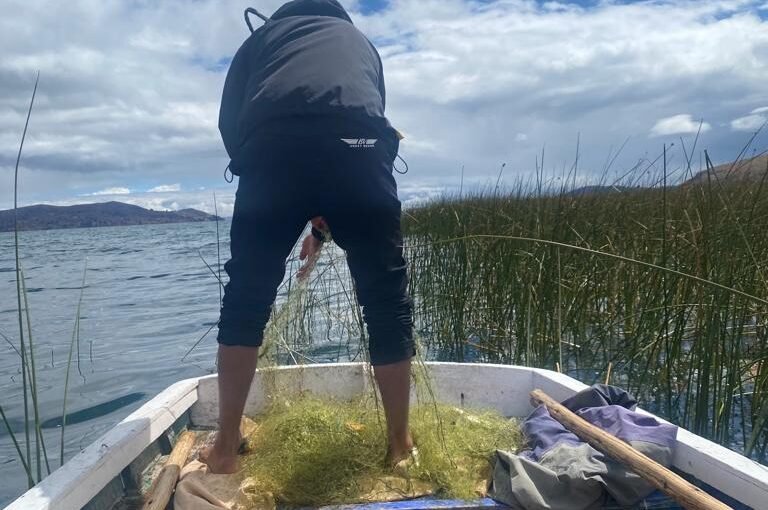
Traditional Fishing: A Bond with Lake Titicaca
Traditional fishing in Luquina Chico represents an essential bond between the community and Lake Titicaca. This practice, passed down from generation to generation, uses ancestral techniques that local fishermen have perfected over the years. These methods not only ensure the efficient capture of various fish but also promote a harmonious relationship with the lake’s biodiversity, considered one of the richest in the world. The lake hosts a wide variety of species, including scad, trout, and the symbolic fish of the region, the chipana.
Fishermen in Luquina Chico use handmade nets, reed canoes, and traditional traps, reflecting a deep understanding of the local ecosystem. Through these techniques, the goal is not only daily subsistence but also the conservation of aquatic resources. By joining this activity, visitors have the opportunity to immerse themselves in the daily life of the inhabitants, contributing to sustainable tourism that respects and values cultural traditions.
The ecological relevance of fishing in Lake Titicaca is also evident in its sustainable management practices. Local fishermen are committed to preserving their environment, implementing methods that help protect aquatic fauna and flora. Participating in traditional fishing is not only a window into an authentic lifestyle but also translates into economic benefits for the community. By purchasing fish products directly, visitors support the local economy and foster sustainability.
In this context, traditional fishing in Luquina Chico goes beyond a recreational activity; it is a way to connect with Andean culture and contribute to the community’s well-being. Tourists are welcome to join fishermen in their daily work, enriching their experience and strengthening the bond between people and the lake.
Andean Cooking Workshops: Authentic Flavors of Puno
Andean gastronomy reflects the rich cultural heritage of the Puno region, and participating in cooking workshops in Luquina Chico allows visitors to deeply immerse themselves in this tradition. During these workshops, attendees learn to prepare emblematic dishes such as pachamanca, a delicious feast combining meat, herbs, and vegetables cooked underground, and quinoa soup, a nutritious staple of the Andean diet since ancient times. These workshops not only teach recipes but also explore the stories and rituals associated with each dish, revealing the role of food in daily life and community celebrations.
Participants often express amazement at discovering the diversity of local ingredients used in Andean dishes. Products such as quinoa, native potatoes, and aromatic herbs take center stage, offering an authentic flavor difficult to replicate elsewhere. A common testimony among attendees is how these experiences allowed them not only to learn cooking skills but also to connect emotionally with the culture and community of Luquina Chico. At the end of each workshop, participants take home not only a new culinary skill but also a sense of belonging and a deeper understanding of local customs.
These workshops highlight the importance of cooking as a vehicle for Andean culture and history. Cooking is not simply an activity but a means of transmitting ancestral knowledge that strengthens community identity. Immersed in the culinary experience, participants have the opportunity to celebrate traditions, learn about the sustainable use of local ingredients, and above all, enjoy a sensory journey that leaves a lasting mark on their travel memories.
Local Handicrafts: A Creative Journey Through Andean Culture
Luquina Chico is a privileged place to explore the rich artisanal traditions of the Andean region. Local handicrafts are more than decorative objects; they are tangible representations of the culture, history, and customs of its inhabitants. Visitors have the opportunity to observe and participate in the creation process of various crafts such as weaving, ceramics, and wood carving, offering a unique experiential encounter.
Weaving is one of the most significant practices in the community. Using ancestral techniques, artisans create colorful textiles that tell stories through their patterns and colors. The women of Luquina Chico, in particular, are recognized for their skill with the traditional loom, where each thread becomes a cultural expression. By learning to weave, visitors not only acquire a new skill but also understand the importance of textiles in daily Andean life, where each garment can hold special meaning.
Ceramics also play a crucial role in Andean culture. Potters in Luquina Chico use local clay to craft pieces ranging from everyday utensils to exquisite works of art. The process includes clay collection, shaping, and firing, with each stage reflecting techniques inherited from past generations. Visitors can participate in ceramic workshops, learning to shape clay while understanding the connection between art and Andean cultural identity.
Wood carving represents another important facet of local crafts. Sculptors create figures that reflect Andean fauna and mythology, each telling a unique story. Through these works, traditions are preserved and Andean legends kept alive. By purchasing these pieces, visitors not only support local artisans but also take home a piece of the rich Andean culture.
Contributing to the Community: The Impact of Cultural Tourism in Luquina Chico
Cultural tourism in Luquina Chico acts as a key catalyst for the sustainable development of this Andean community. The cultural richness, combined with the beauty of Lake Titicaca, has attracted visitors seeking authentic experiences, enriching both their understanding of Andean culture and the local economy. As tourists engage in activities ranging from craft workshops to musical traditions, the community benefits in tangible ways.
One of the main advantages of cultural tourism is its ability to generate local employment. Many families have found in tourism a source of income through lodging, selling handicrafts, and offering guiding services. For example, initiatives such as organizing traditional festivals have allowed locals to showcase their cultural heritage while attracting more visitors. These events not only celebrate Andean culture but also provide opportunities for tourists to participate actively, creating meaningful exchanges between visitors and residents.
Moreover, cultural tourism has encouraged the preservation of traditions and customs that might otherwise have been lost over time. The demand for cultural experiences has motivated communities to revitalize ancestral practices, ensuring that future generations inherit a rich cultural heritage. This focus on responsible tourism also raises awareness about the importance of supporting local communities and provides the resources needed to sustain these efforts.
Therefore, by choosing experiential tourism in Luquina Chico, travelers not only expand their cultural understanding but also play a fundamental role in strengthening the local economy and preserving Andean traditions. Considering the impact of their travel decisions can lead to positive change, helping promote cultural tourism that benefits everyone involved.


